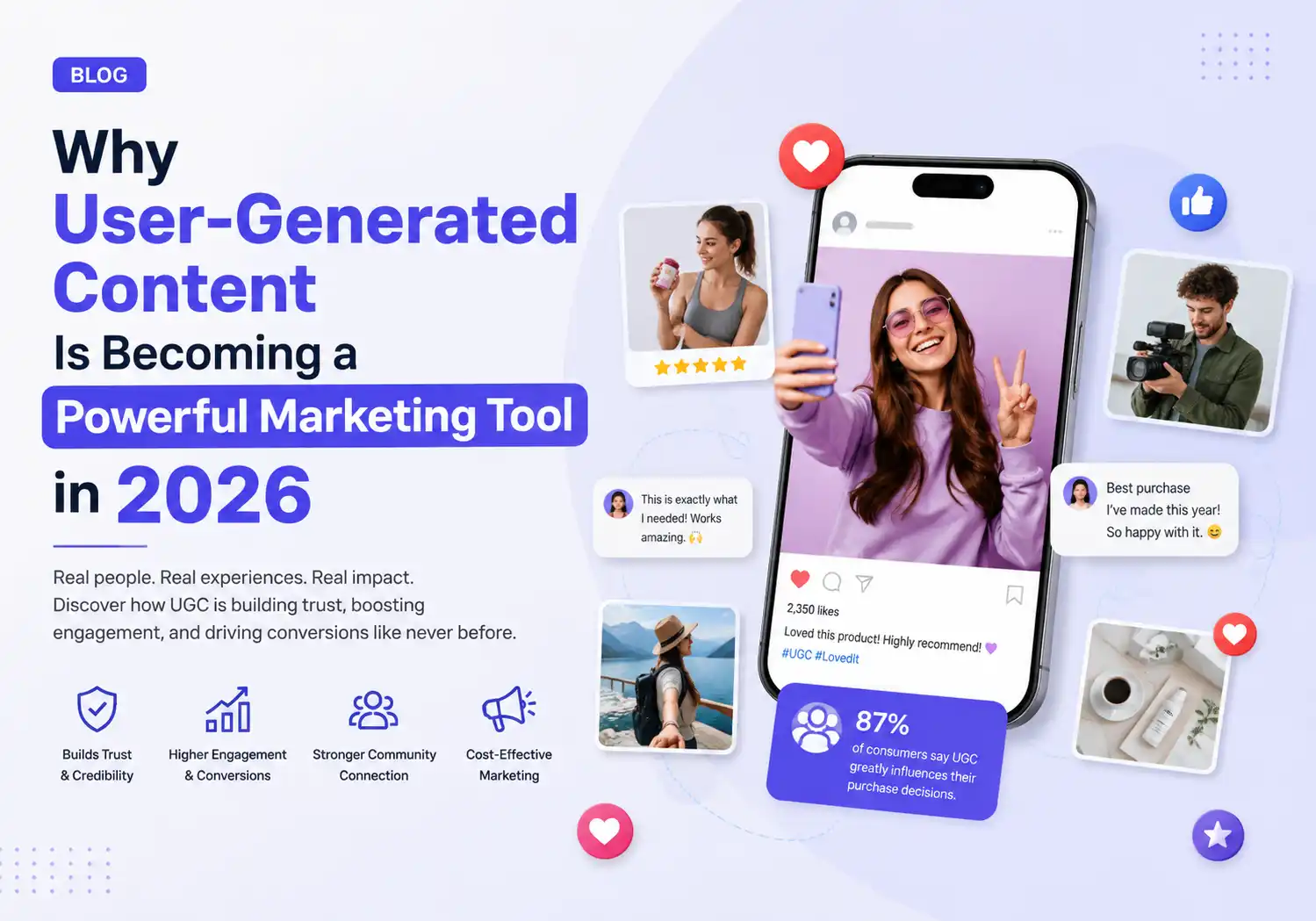
Consumers have become even more discerning about their beliefs by 2026. Traditional advertising may be eye-catching, but consumers today seek authenticity in experiences, reviews, and stories told from the point of view of people exactly like them.
User Generated Content is an integral part of marketing strategy today.
Reviews, social media posts, product unboxing, testimonials—this type of content gives brands an opportunity to present their products through the eyes of real people. Combining user-generated content and PPC ads gives campaigns more credibility and relatability.
What Is User-Generated Content?
UGC refers to content produced not by the brand itself but by its customers, users, or community members.
Common examples include:
- Customer reviews and ratings
- Instagram and Facebook posts
- TikTok and short-form videos
- Product unboxing videos
- Customer testimonials
- Before-and-after experiences
- Product demonstration videos
- Customer photos
- Comments and social media mentions
Instead of providing prospective customers with reasons to believe in the brand, UGC allows them the chance to see how the product works for other people.
Why Is UGC Becoming So Powerful in 2026?
1. Consumers Want Authenticity
Everyone comes across ads on a daily basis through search engines, social media sites, websites, and mobile applications. In light of this, highly polished ads can sometimes be perceived as being less credible.
UGC offers a more organic way of communicating.
A customer’s firsthand experience of a product can be perceived as more realistic than an advertisement created by professionals.
2. Social Proof Influences Buying Decisions
Prior to buying anything, most consumers seek out reviews, testimonials, ratings, and recommendations.
UGC serves as a form of social proof.
When consumers see actual people talking positively about a particular product, they tend to feel more certain about the purchase.
For instance, the online clothing store could incorporate UGC in which the users show the way a particular dress looks in different settings.
3. UGC Works Extremely Well With PPC Campaigns
A huge potential opportunity for 2026 will be the integration of user-generated content with PPC ads.
Rather than relying on promotional creatives alone, one could use customer testimonials, review-based ads, demo ads, and content by creators.
UGC can be used across:
- Google Ads
- YouTube Ads
- Meta Ads
- Instagram Ads
- TikTok Ads
- Display campaigns
- Remarketing campaigns
All that needs to be done is to make the advertisements appear to be relevant and credible without losing the persuasive message
How Can UGC Improve PPC Campaigns’ Performance
A successful PPC campaign depends on several factors, including targeting, creative quality, landing pages, offers, and user intent.
UGC can strengthen the creative side of the campaign.
For example, instead of an advertisement saying:
“Our skincare product delivers amazing results.”
A UGC-style advertisement could show a customer explaining their personal experience with the product.
The second approach gives viewers context and creates a more conversational experience.
However, UGC is not automatically successful. Advertisers should continuously test different hooks, formats, audiences, and calls to action to determine what performs best.
Types of UGC Brands Can Use in PPC
Customer Testimonial Videos
Short customer testimonials can be powerful advertising assets.
A good testimonial should focus on a specific problem, experience, or result rather than simply saying that the product is “great.”
Product Demonstrations
Demonstration videos show customers how a product works.
These are particularly useful for products that require explanation, such as software, electronics, beauty products, fitness products, and household solutions.
Unboxing Content
Unboxing videos can create curiosity and showcase the customer experience from the moment a product arrives.
They can highlight packaging, product quality, features, and first impressions.
Customer Reviews
Written reviews can also become advertising assets.
Brands can use authentic customer feedback in creative designs, landing pages, remarketing campaigns, and other marketing materials, provided they have the appropriate permission.
Creator-Style Content
Creator-style videos are designed to feel natural and platform-friendly rather than like traditional commercials.
A creator may explain a problem, demonstrate a product, share an experience, and finish with a simple call to action.
How to Create a UGC Strategy for PPC
Creating effective UGC campaigns requires more than collecting random customer posts.
Step 1: Identify Your Target Audience
First, understand who you want to reach.
Consider:
- Age group
- Interests
- Buying intent
- Common problems
- Customer objections
- Preferred platforms
- Previous interactions with your brand
Understanding the audience helps you choose the right type of UGC.
Step 2: Find Real Customer Stories
Look through reviews, social media mentions, customer feedback, and testimonials.
Identify recurring themes.
For example, customers may repeatedly mention:
- Easy installation
- Fast delivery
- Affordable pricing
- Product quality
- Time savings
- Customer support
These insights can become the foundation for new advertising creatives.
Step 3: Create Multiple Creative Variations
Don’t rely on one UGC advertisement.
Create several versions with different:
- Opening hooks
- Video lengths
- Headlines
- Testimonials
- Offers
- Calls to action
- Visual styles
Then allow your PPC campaigns to provide performance data.
Step 4: Test and Optimize
PPC marketing is based on measurable performance.
Track metrics such as:
- Click-through rate (CTR)
- Conversion rate
- Cost per click (CPC)
- Cost per acquisition (CPA)
- Return on ad spend (ROAS)
- Engagement rate
The best-performing UGC can then be used as a foundation for additional creative variations.
UGC and AI in 2026
Artificial intelligence is another factor that influences how marketers develop UGC campaigns.
Marketers can use artificial intelligence to analyze customer reviews, find out what they have in common, generate ideas, organize information, and make variations for testing.
Nevertheless, brands need to be cautious and do not deprive themselves of the advantage that UGC provides them with – authentic customer experience.
The aim is not to make all pieces of content look artificial and similar, but to use technology to reveal authentic customer stories.
Benefits of Combining UGC With PPC
The proper use of both UGC and PPC could lead to certain benefits:
Improved audience engagement: Real-life experiences would become more relatable than regular advertisements.
Increased creativity: It becomes possible for the company to develop different advertising ideas based on customer experiences.
Social validation: Positive reviews and testimonials could be helpful for addressing customer objections.
Quicker concept testing: Different UGC concepts could be tested for developing an efficient message.
Effective remarketing: Customers’ experiences and testimonials could come in handy for targeting the audience familiar with the brand.
Possible Missteps
The effectiveness of the UGC campaign could decrease when the company makes the material seem promotional.
Avoid:
- Using fake reviews
- Editing customer statements in a misleading way
- Making every video look like a traditional commercial
- Using customer content without proper permission
- Focusing only on views instead of conversions
- Using one creative for every audience
- Ignoring negative customer feedback
The authenticity of UGC content is another reason why people respond to this type of information. Therefore, brands have to protect the authenticity of their UGC.
The Future of UGC Marketing
Since consumers pay much attention to transparency and experience, UGC is expected to continue to be popular for use in digital advertising in the future.
There is a very interesting aspect related to PPC campaigns: paid advertising can provide the reach and targeting, whereas UGC can add the human touch.
Therefore, the possibility to combine paid campaigns and UGC can result in a highly effective advertising strategy that involves both the generation of clicks and trust.
As of 2026, brands will have to think about something other than how to advertise the products.
Instead, they have to ask themselves another question: how to show the real people benefiting from using the products?
Conclusion
In 2026, User Generated Content becomes a highly useful marketing instrument since it allows incorporating social proof, relatability, and authenticity into the advertisements.
In case this content is used as part of a PPC campaign, it may allow advertisers to get additional creative options and more possibilities for building connections with their audience.
It is important to pay attention to the actual customer experience, try various creative formats, measure the effectiveness of UGC campaigns, and optimize campaigns.