The world today is full of competition, and a good online presence cannot be ignored for any type of business. If you own a local business, an ecommerce business, a start-up or an already established one, you will notice that people spend a considerable amount of their time online.
A digital marketing agency uses various forms of online marketing techniques to help you get in touch with your target audience and make more sales.
What Is a Digital Marketing Agency?
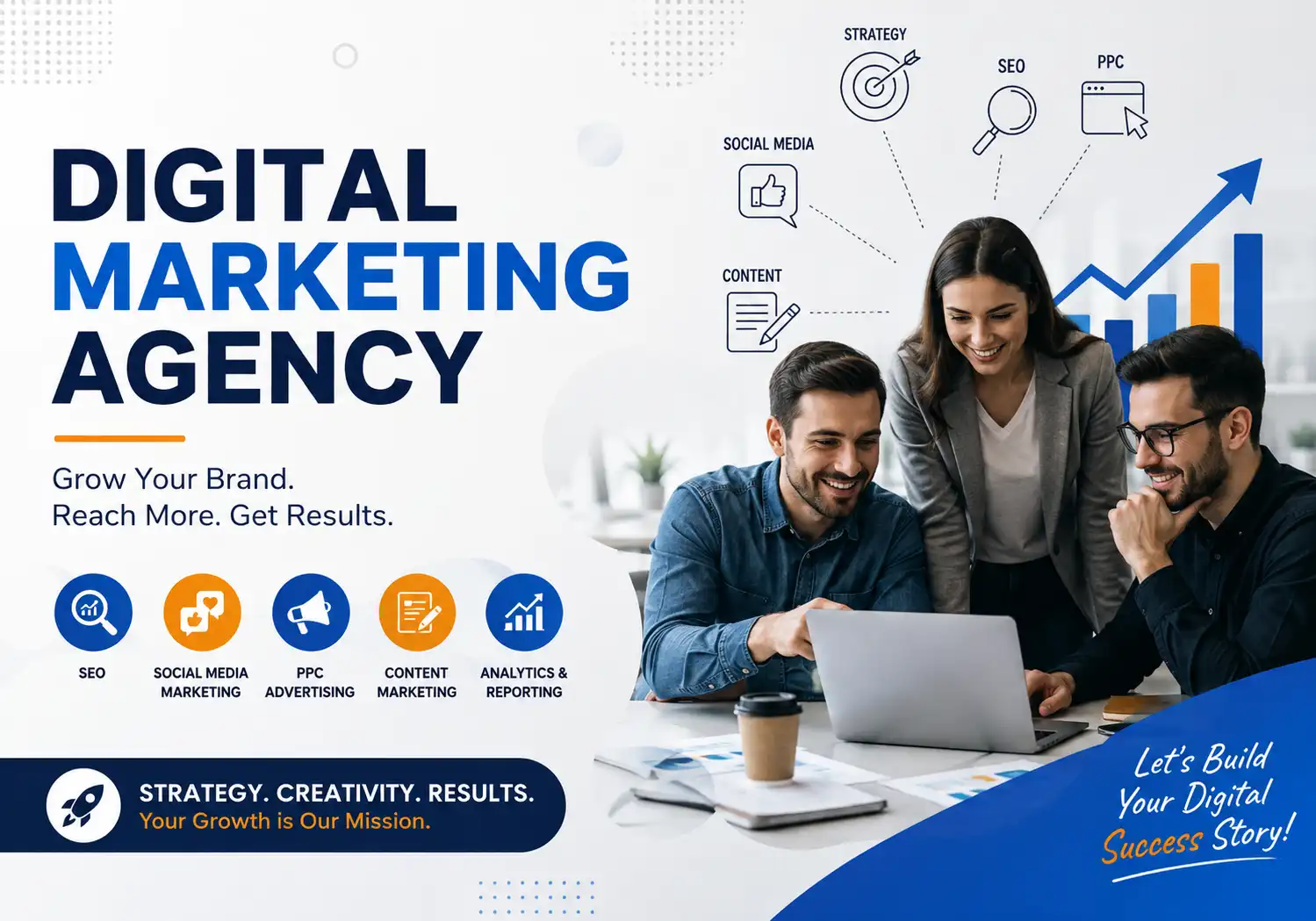
A digital marketing agency refers to an organization that offers marketing services via digital channels. Rather than using traditional means of advertisement, businesses can employ the use of digital marketing channels including search engines, social networks, web sites, emails, and online ads to reach out to prospective clients.
An effective digital marketing agency will develop a marketing strategy for the business.
Why Is Digital Marketing Important for Businesses?
People search online before making many purchasing decisions. They compare products, read reviews, visit websites, and check social media pages before contacting a business.
With the right digital marketing strategy, a business can:
- Reach potential customers online
- Build a recognizable brand
- Increase website traffic
- Generate quality leads
- Improve search engine visibility
- Connect with customers through social media
- Increase online sales
- Measure marketing performance
Unlike many traditional marketing methods, digital marketing also provides useful data. Businesses can analyze website visitors, advertising performance, engagement, conversions, and other important metrics.
Major Services Offered by a Digital Marketing Agency
1. Search Engine Optimization
Search Engine Optimization, commonly known as SEO, helps a website improve its visibility on search engines.
An SEO strategy may include keyword research, website optimization, technical improvements, content creation, internal linking, and authority building.
The goal is not simply to attract more visitors, but to attract people who are genuinely interested in the products or services offered by the business.
2. Social Media Marketing
Social media has become an important channel for businesses to communicate with their audience.
A digital marketing agency can help create social media strategies for platforms such as Instagram, Facebook, LinkedIn, and other relevant networks.
Social media marketing can help businesses:
- Increase brand awareness
- Build an online community
- Share useful content
- Promote products and services
- Generate enquiries
- Maintain relationships with customers
3. Pay-Per-Click Advertising
Paid advertising can help businesses reach potential customers quickly.
Platforms such as Google Ads and social media advertising allow businesses to target audiences based on factors such as search intent, interests, location, demographics, and online behavior.
A professional agency can manage campaigns, test different advertisements, monitor results, and optimize spending.
4. Content Marketing
Content is an important part of modern digital marketing. Helpful and original content can attract visitors and establish a business as a trusted source of information.
Content marketing can include:
- Blog articles
- Website pages
- Guides
- Infographics
- Videos
- Social media content
- Case studies
The best content focuses on answering real questions and solving problems faced by the target audience.
5. Website Development and Optimization
A marketing campaign can bring visitors to a website, but the website needs to provide a good experience.
A digital marketing agency may help businesses improve website design, loading speed, mobile responsiveness, navigation, landing pages, and conversion elements.
A professional website should make it easy for visitors to understand what the business offers and what action they should take next.
How to Choose the Right Digital Marketing Agency
Choosing an agency is an important decision because every business has different goals.
Before hiring an agency, consider the following factors:
Understand their approach: Ask how they plan to achieve your marketing goals rather than focusing only on promises of quick results.
Check their experience: Look at their previous projects, industries served, and marketing expertise.
Ask about reporting: A reliable agency should provide understandable reports showing important campaign metrics and progress.
Discuss your goals: Clearly explain whether you want more leads, sales, website traffic, brand awareness, or local visibility.
Consider communication: Regular communication makes it easier to understand what is happening with your campaigns.
Benefits of Working With a Digital Marketing Agency
Working with an experienced agency can give a business access to marketing knowledge, tools, strategies, and specialists without building a complete in-house marketing team.
An agency can also help identify opportunities, analyze competitors, test different strategies, and make decisions based on campaign data.
However, digital marketing is not an overnight process. SEO and brand building can take time, while paid advertising can produce faster traffic but requires careful management. The right strategy depends on the business and its objectives.
The Future of Digital Marketing
Digital marketing continues to evolve as technology and customer behavior change. Businesses now have more ways than ever to communicate with potential customers.
Artificial intelligence, automation, video content, personalized marketing, search optimization, and data-driven advertising are likely to remain important areas of digital marketing.
Businesses that consistently understand their customers and provide useful online experiences will have better opportunities to build long-term relationships.
Final Thoughts
A strong digital presence can help businesses compete in an increasingly connected marketplace. From SEO and social media to paid advertising and content marketing, a digital marketing agency can bring different online strategies together under one plan.
The key is to focus on the right audience, create valuable content, measure results, and continuously improve the marketing strategy.
If your business wants to attract more customers online and build a stronger digital presence, partnering with the right digital marketing agency can be an important step toward long-term growth.